ACT — Allied Charter of Tenets: Strategic Governance & Diplomacy Framework for Server 216
Category: Strategy & Diplomacy
Framework: ACT — Allied Charter of Tenets
Server: S216
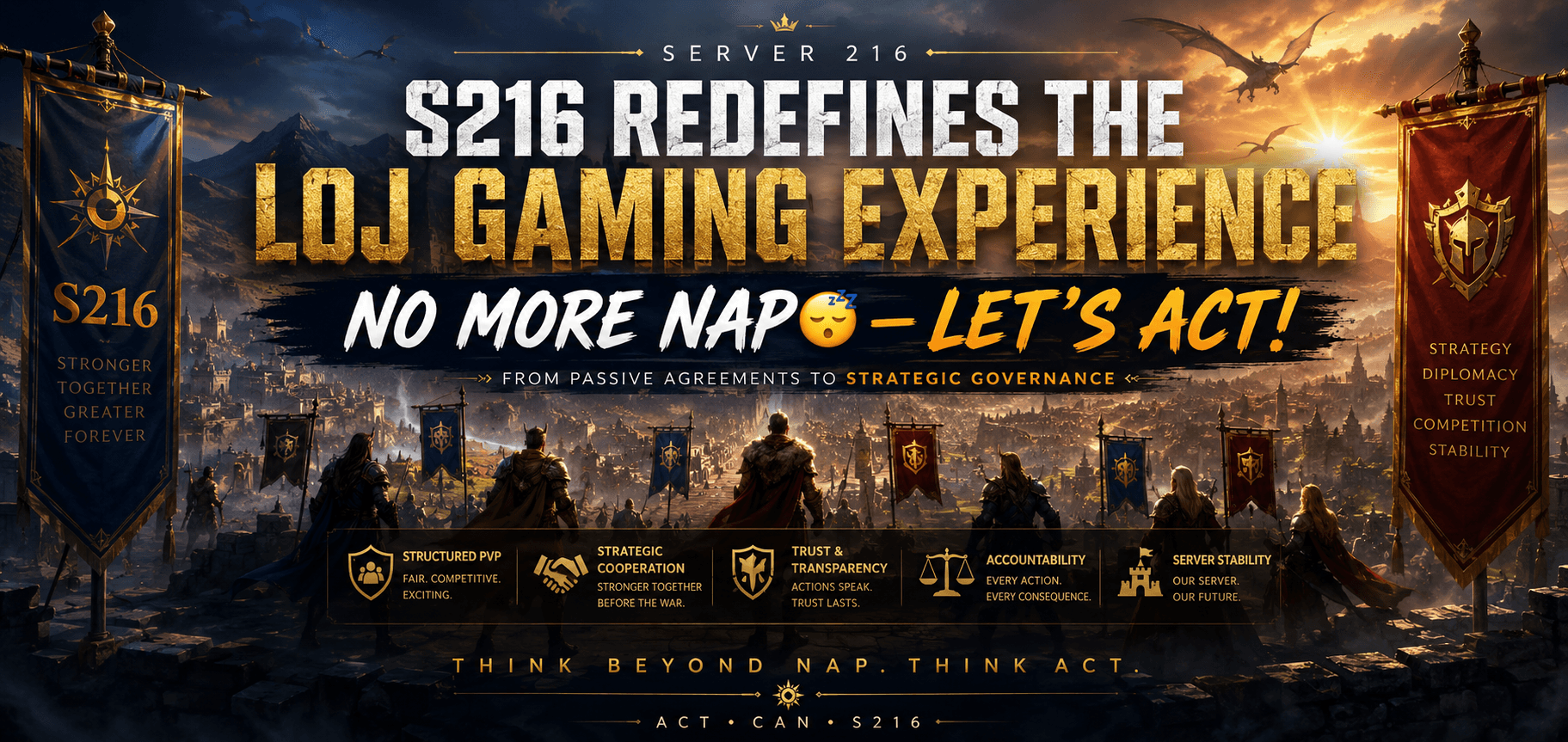
Purpose: Replacing passive NAP agreements with structured diplomacy, trusted cooperation, controlled PvP, and server-wide stability.
Introduction: Why Server 216 Needs ACT
Servers do not collapse because of war alone. They collapse because of distrust, fragmented leadership, unclear intentions, emotional retaliation, hidden agendas, and the absence of structure.
For a long time, many servers depended on traditional NAP agreements. While NAP can reduce direct conflict, it often becomes passive, restrictive, and unclear. It prevents some attacks, but it does not create real strategy, accountability, or long-term cooperation.
ACT — Allied Charter of Tenets is a new governance and diplomacy framework created to move Server 216 beyond passive NAP systems and into a more mature, structured, and competitive model.
ACT does not remove competition. It organizes it.
ACT does not remove conflict. It structures it.
ACT does not force loyalty. It builds trust through actions.
What Is ACT?
ACT stands for Allied Charter of Tenets.
It is a server-wide strategic framework designed to guide how alliances communicate, cooperate, compete, resolve conflicts, and protect the long-term stability of Server 216.
ACT is not a single alliance. It is not a dictatorship. It is not ownership of the server.
ACT is a shared operating system for diplomacy, war preparation, structured PvP, alliance trust, and responsible leadership.
Why ACT Replaces the Old NAP Model
The Problem with Traditional NAP
- NAP is passive.
- NAP limits gameplay without improving coordination.
- NAP often creates hidden tension between alliances.
- NAP protects silence but does not build trust.
- NAP can make servers weak, inactive, and politically frozen.
The ACT Alternative
- ACT allows structured PvP.
- ACT protects players from unnecessary losses.
- ACT encourages cooperation before major wars.
- ACT supports fair competition.
- ACT creates accountability and transparency.
- ACT improves server-wide readiness for SVS and other major events.
Core Philosophy
We do not eliminate conflict. We structure it.
Server 216 should not become a place where players are afraid to compete, but it should also not become a place where random attacks, personal revenge, and hidden politics destroy growth.
The goal is balance:
- Freedom without chaos.
- Competition without destruction.
- Diplomacy without weakness.
- Leadership without ego.
ACT Core Objectives
- Protect server stability.
- Improve coordination before SVS and major events.
- Replace passive NAP with active governance.
- Create clear rules for PvP and conflict.
- Encourage trust and transparency between alliances.
- Separate personal conflicts from server strategy.
- Build a stronger, more competitive Server 216.
ACT Strategic Pillars
1. Stability
The long-term health of Server 216 comes before individual ego, alliance pride, or short-term emotional decisions.
2. Structured Conflict
Conflict is allowed only inside agreed, controlled, and event-based environments.
3. Trust
Trust is a strategic resource. It is earned through consistent actions, clear communication, and honest intentions.
4. Transparency
Major strategic changes, migration plans, alliance shifts, or war-related decisions should be communicated clearly when they affect the server.
5. Accountability
Every action has consequences. Leaders and alliances are responsible for their decisions.
6. Competitive Growth
ACT supports strong players, strong alliances, and strong competition, as long as growth does not damage the server ecosystem.
Step-by-Step ACT Governance Model
Step 1: Recognize Alliance Sovereignty
Every alliance keeps its own identity, leadership, rules, and internal structure. ACT does not control internal alliance decisions.
Step 2: Agree on Shared Server Rules
All participating alliances agree to follow the same basic server conduct principles: no chaos, no random destruction, no hidden sabotage, and no unnecessary internal damage.
Step 3: Coordinate Before Major Events
Before major server events, leaders may coordinate strategy, timing, priorities, and participation plans to improve the server’s total performance.
Step 4: Allow Structured Competition
Competition remains allowed in approved environments such as Supremacy, Development Centers, Strongholds, SVS objectives, and official PvP events.
Step 5: Resolve Conflict Through Process
Disputes should move through communication, assessment, cooling period, leadership review, and controlled response before escalation.
Step 6: Review Trust and Reputation
Alliances build or lose trust based on behavior, consistency, transparency, and contribution.
PvP Regulation Policy
Restricted Actions
- Random base attacks.
- Emotional retaliation.
- Resource sabotage.
- Internal server destruction.
- Attacks based on personal conflict.
- Unapproved escalation between aligned alliances.
Approved Combat Environments
- Supremacy.
- Development Centers Level 2 and Level 3.
- Basic Iron Strongholds.
- Official SVS objectives.
- Official PvP events.
- Leadership-approved structured combat.
Base Attack Policy
Base attacks are not allowed as a normal internal server practice.
This applies to:
- Same-server players.
- Opposing-server players during SVS, unless leadership approves a specific target list.
Exceptions
- Inactive accounts when necessary.
- Accounts being farmed by enemies.
- Server-level emergency decisions.
- Targets approved collectively by R5/R4 leadership.
Event Cooperation Model
Server strength is not built only during war. It starts before war.
ACT encourages optional cooperation during important preparation and growth events.
Events Where Cooperation May Apply
- SVS Preparation Phase.
- Prestige Events.
- Migration Windows.
- Resource Optimization Events.
- Server Defense Preparation.
- Major scoring events that affect server strength.
Cooperation Principles
- Cooperation is encouraged but not forced.
- Competition remains allowed.
- Plans must be clear and transparent.
- Alliances may coordinate without losing independence.
- Trust is required before deep cooperation.
The purpose is not to control winners. The purpose is to prevent waste, strengthen the server, and build better readiness before war.
Trust & Transparency Principle
ACT is built on trust, but trust does not mean blind loyalty.
Trust means:
- Clear intentions.
- Honest communication.
- Consistency between words and actions.
- No misleading representation.
- No hidden agendas that damage server stability.
Alliances are free to change names, leadership, strategy, and direction. However, when those changes affect server diplomacy or shared trust, communication becomes important.
Clean Slate Doctrine
ACT does not exist to punish old stories.
Server 216 has history. Players migrated, alliances changed, old conflicts happened, and personal disagreements existed. ACT does not automatically carry those stories forward.
The Clean Slate Doctrine means:
- Old personal issues should not control current diplomacy.
- Past migration stories should not automatically block cooperation.
- Players and alliances should be judged by current actions.
- The server should move forward based on present behavior and future commitments.
Separation of Personal and Server Interests
Personal conflict must not become server policy.
Server decisions should be based on:
- Performance.
- Reliability.
- Transparency.
- Contribution.
- Respect for agreed rules.
Private history, emotional disagreements, or old rivalries should not be used as the main reason to restrict cooperation.
Alliance Interaction Framework
Internal Conduct
- No hostile actions between aligned alliances.
- No sabotage.
- No resource targeting.
- No public humiliation campaigns.
- No emotional escalation before leadership communication.
Coordination
- Major actions should be communicated between leaders.
- Alliances keep autonomy.
- Server-wide risks should be discussed collectively.
Mutual Support
- Alliances may support each other when needed.
- Support can include reinforcements, advice, event planning, or diplomatic mediation.
- Support is encouraged but not forced.
Conflict Resolution Model
Step 1: Direct Communication
Leaders contact each other privately to clarify the situation before public escalation.
Step 2: Assessment
The issue is reviewed to determine whether it was a misunderstanding, mistake, violation, or intentional action.
Step 3: Cooling Period
When emotions are high, a short cooling period may be used before action is taken.
Step 4: Leadership Review
Relevant R5/R4 leaders discuss the matter and agree on the appropriate response.
Step 5: Controlled Response
If action is required, it should be proportional, coordinated, and connected to the violation.
Step 6: Restoration Path
Whenever possible, ACT prioritizes restoration before separation.
Prohibited Actions Under ACT
- Independent retaliation without communication.
- Emotional public accusations.
- Identity manipulation.
- Hidden diplomacy that damages server trust.
- Using personal issues to trigger server conflict.
- Misleading alliances about strategic intentions.
- Repeated rule violations without accountability.
Reputation System
ACT does not only measure power. It also measures reliability.
Reputation Increases Through
- Consistent participation.
- Clear communication.
- Helping during major events.
- Respecting agreements.
- Supporting server defense.
- Responsible leadership behavior.
Reputation Decreases Through
- Repeated inconsistency.
- Misleading communication.
- Strategic opportunism.
- Breaking agreements.
- Creating unnecessary drama.
- Damaging server stability.
Trust Levels
- Level 1 — Communication: Alliance is open to discussion.
- Level 2 — Consistency: Words and actions begin to match.
- Level 3 — Cooperation: Alliance participates in shared goals.
- Level 4 — Reliability: Alliance can be trusted during pressure.
- Level 5 — Strategic Partnership: Alliance is considered a stable long-term partner.
Trust can be rebuilt, but it cannot be demanded.
Enforcement Policy
Internal Violations
- Warning.
- Leadership review.
- Temporary restriction.
- Loss of ACT protection.
- Removal from ACT alignment.
External Violations
- Non-compliant entities may lose protection.
- Repeated hostile actors may be classified as valid targets.
- Server-level threats may trigger collective response.
Strategic Advantages of ACT Over NAP
| NAP Model | ACT Model |
|---|---|
| Passive peace | Active coordination |
| Restricts gameplay | Structures gameplay |
| Creates silence | Encourages communication |
| Protects alliances only | Protects server stability |
| No clear accountability | Defined accountability |
| Can cause stagnation | Encourages growth and performance |
Operational Summary
ACT transforms Server 216 from:
- Random conflict into structured engagement.
- Passive coexistence into active coordination.
- Fragmented alliances into a connected system.
- Emotional escalation into diplomatic process.
- Old NAP politics into strategic governance.
Final Declaration
This server belongs to nobody.
It is built by everybody.
Power changes. Trust remains.
We do not build power through fear, suspicion, or destruction.
We build power through structure, transparency, and shared responsibility.
ACT • S216
Strategy • Diplomacy • Stability